Why Access to Information No Longer Equals Intelligence
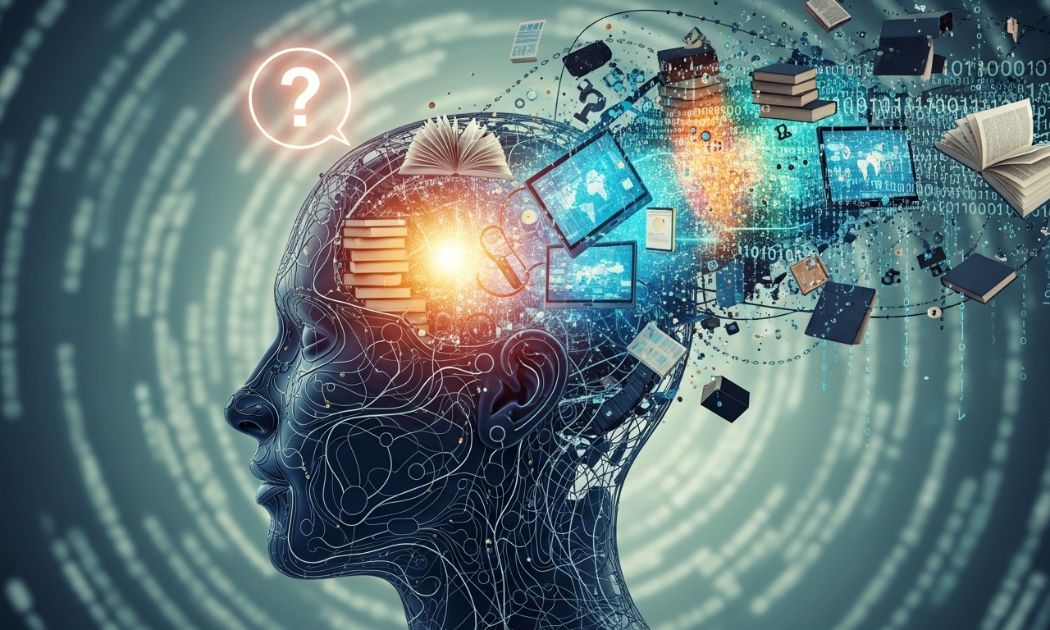
The digital era has transformed how knowledge is acquired, stored, and applied. With a smartphone and internet connection, students can retrieve vast amounts of data within seconds. However, this unprecedented access has also exposed a critical distinction: information availability does not automatically translate into intelligence. For students preparing to study abroad, understanding this difference is essential for academic success and long-term career growth.
The Shift from Knowledge Scarcity to Information Overload
In earlier decades, education focused heavily on memorization because information was limited and difficult to access. Libraries, textbooks, and lectures were primary sources of knowledge. Today, search engines, online databases, and AI tools provide instant answers. While this convenience is valuable, it creates a new challenge—information overload.
Students often encounter excessive data without clear frameworks to evaluate credibility or relevance. This can lead to confusion, shallow understanding, and poor decision-making. Intelligence now depends less on what you know and more on how effectively you process, analyze, and apply information.
Critical Thinking as the New Core Skill
Modern education systems, especially in international universities, emphasize critical thinking. Professors expect students to question assumptions, compare perspectives, and build logical arguments. Simply reproducing information from online sources is no longer sufficient.
For studying abroad students, this shift can be challenging. Academic cultures in countries like the US, UK, Canada, and Australia prioritize:
- Independent analysis
- Evidence-based reasoning
- Original insights
Developing these skills requires moving beyond passive consumption of content. Instead, students must actively engage with ideas—evaluating sources, identifying biases, and forming their own conclusions.
The Role of Digital Literacy
Access to information is only useful when paired with strong digital literacy. This includes the ability to:
- Identify credible academic sources
- Distinguish between facts and opinions
- Recognize misinformation and biased content
- Use digital tools responsibly
Many students assume that top search results are reliable, but algorithms often prioritize popularity over accuracy. Without proper evaluation skills, students risk using incorrect or outdated information in assignments and research projects.
For international students, this becomes even more important because academic integrity policies are strict. Misuse of sources—whether intentional or accidental—can lead to serious consequences.
Application Over Memorization
Global education trends are shifting toward practical application. Employers and universities value individuals who can apply knowledge in real-world scenarios rather than simply recall facts.
For example:
- Understanding a business theory is less valuable than applying it to solve a case study
- Knowing scientific concepts matters less than using them in experiments or research
- Learning a language involves communication skills, not just vocabulary memorization
Studying abroad environments often include group projects, presentations, and problem-based learning. These formats test how well students can use information, not just access it.
Cognitive Skills That Define Intelligence Today
In the current academic landscape, intelligence is increasingly defined by a combination of higher-order cognitive skills:
1. Analytical Thinking
Breaking down complex information into understandable components.
2. Synthesis
Combining ideas from multiple sources to create new insights.
3. Problem-Solving
Applying knowledge to unfamiliar situations.
4. Adaptability
Learning new systems, technologies, and cultural norms quickly.
5. Communication
Expressing ideas clearly in written and verbal formats.
These skills are particularly important for students adjusting to new academic systems abroad, where expectations may differ significantly from their home country.
The Impact of AI and Automation
Artificial intelligence tools have further blurred the line between information access and intelligence. AI can generate summaries, answer questions, and even assist with writing. While these tools can enhance productivity, over-reliance can hinder skill development.
Students who depend entirely on AI risk:
- Weak critical thinking abilities
- Limited originality
- Poor academic performance in assessments requiring independent work
Successful students use AI as a support tool rather than a replacement for thinking. The key is to validate, refine, and build upon AI-generated content.
Learning How to Learn
One of the most valuable outcomes of studying abroad is developing meta-learning skills—learning how to learn effectively. This includes:
- Managing time and academic workload
- Adapting to different teaching styles
- Seeking feedback and improving continuously
- Engaging in self-directed learning
Access to information becomes meaningful only when students know how to structure their learning process. This is especially important in international education systems that emphasize autonomy.
Cultural and Academic Adaptation
Different countries have distinct academic expectations. For instance:
- Western universities often encourage debate and classroom participation
- Some systems prioritize research and independent study
- Others focus on collaborative learning and peer interaction
Students who equate intelligence with memorization may struggle in environments that require discussion, argumentation, and creativity. Understanding these expectations early can significantly improve academic performance.
Read More-Who Are You When No One Knows You? Studying Abroad and Self-Discovery
Building Long-Term Intellectual Growth
True intelligence develops over time through consistent practice and reflection. Students can strengthen their intellectual abilities by:
- Engaging deeply with course materials
- Participating in discussions and academic forums
- Reading beyond assigned texts
- Practicing writing and analytical skills regularly
The goal is not to collect information but to transform it into knowledge and insight.
Conclusion
Access to information has become universal, but intelligence remains a differentiated skill. For studying abroad students, success depends on the ability to think critically, apply knowledge, and adapt to new academic environments. The focus must shift from simply finding answers to understanding and using them effectively.
In a world where information is abundant, the real advantage lies in interpretation, judgment, and innovation. Students who develop these capabilities will not only excel academically but also thrive in global careers.
FAQs
1. Why is access to information not considered intelligence anymore?
Because information is easily available to everyone, intelligence is now measured by how well individuals analyze, interpret, and apply that information rather than simply possessing it.
2. How can studying abroad students improve critical thinking skills?
They can practice evaluating sources, engaging in discussions, solving real-world problems, and writing analytical essays instead of relying on memorization.
3. Do AI tools reduce the need for intelligence in academics?
No, AI tools support learning but do not replace critical thinking. Students still need to evaluate, refine, and apply information independently to succeed.